Record a dream by voice or text. Receive an analysis grounded in the Jungian analytical-psychology tradition, plus a symbolic image of the dream.
We follow the analytical-psychology tradition: not a dream dictionary, but work with your own associations.
Each dream image stirs feelings, memories, phrases. We write them down as they come — without rushing.
We ask: what part of me is this image? Where in my life is the same theme at work right now?
Associations and personal context come together into a single message. What does the dream propose, correct, or invite?
A small symbolic act that carries the dream's message into everyday life.
Here is how a dream analysis looks in the app.
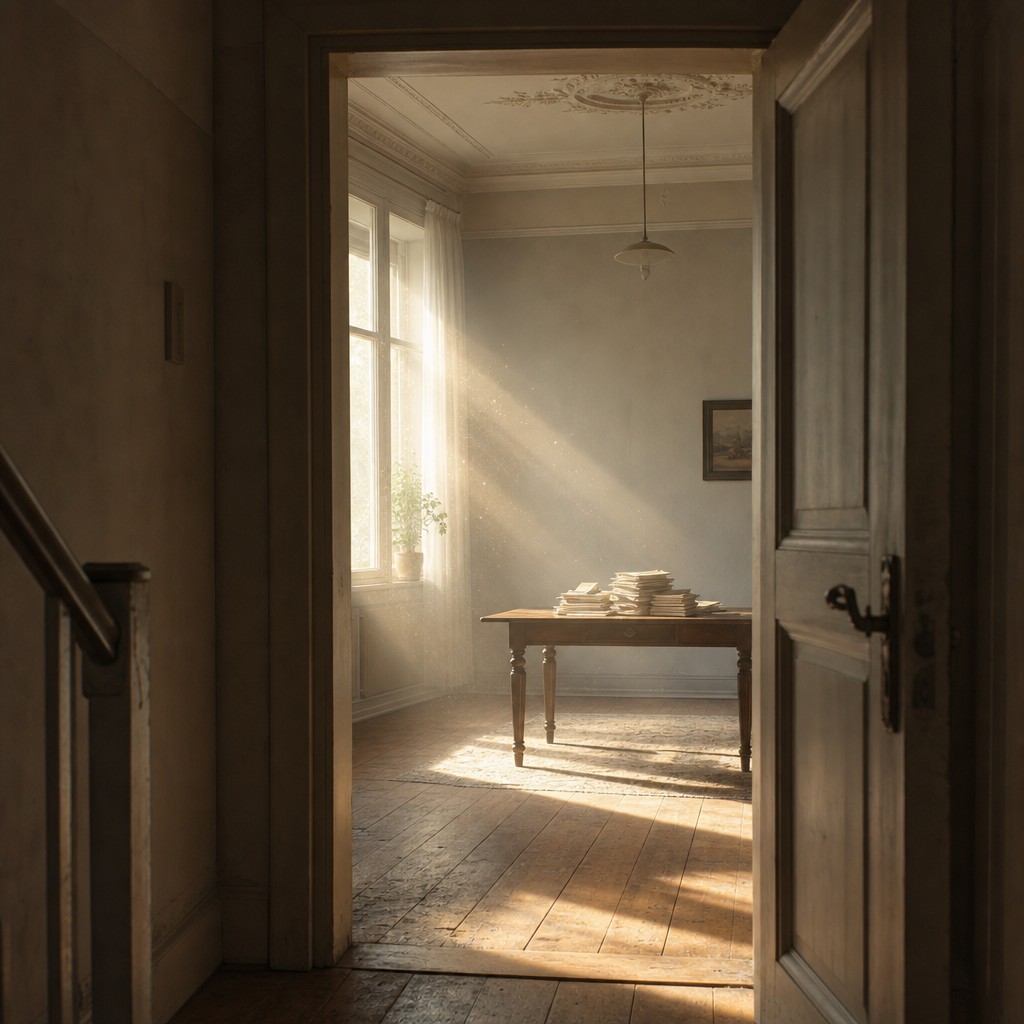
The childhood home appears here as the whole "building" of your psyche: familiar, safe, yet governed by old rules. A door that "was never there" often points to a part of the self not yet recognised — not a foreign world, but a hidden room inside your own house. It matters that you feel calm curiosity rather than fear: the psyche seems to offer this expansion gently, not as a threat to your life's order but as its deepening. The letters on the old table are messages composed within you, but not yet received. The dream's invitation is not to escape your present structure, but to rediscover what it holds. What part of you wrote those letters — and what does it want you to finally know?
Record your dream right after waking — the app turns it into text for you.
The analysis follows the analytical-psychology tradition: no fixed meanings, no prophecy.
An image is created from your dream — a reflection of its symbols and mood.
After the analysis, a small act is suggested to help you carry the dream's message through the day.
Jung saw dreams as neither prophecies nor riddles. In his words, a dream "does not conceal, but teaches": it compensates — it shows what the conscious attitude overlooks or avoids.
Už Sapno follows this tradition. The app never tells you what a dream "means" — it offers associations and questions, and leaves the conclusion to you.
This is not therapy, and it does not replace it. It is a grounding practice — a way of listening to yourself more closely.
If you see a therapist, practise reflection, or simply want to know yourself better — dreams can become part of that work.
If you read Jung, von Franz, or Edinger — this is a way to turn the method into a daily practice.
If you want a practice that slows you down rather than speeds you up — writing down a dream in the morning is exactly that.
Downloading is free. The first 14 days give you full access. Cancel any time in your Apple ID settings.
It is the analytical-psychology tradition: dreams are not assigned fixed meanings. The work goes through associations, personal context, interpretation, and embodiment — the conclusion is left to you.
Yes. Dreams stay in your account, are never shown publicly, and are not used to train models. Full details are in our privacy policy.
We are focused on one platform for now. A web version works at uzsapno.lt. Android — later.
14 days of full access: dreams, analysis, images, embodiment invitations. Cancel during the trial and you pay nothing.
Your dreams stay in your account, and completed analyses remain accessible. You won't be able to create new analyses past the free limit.
The analysis replies in the language you wrote the dream in. Lithuanian and English both work.
"The dream is a little hidden door in the innermost and most secret recesses of the soul, opening into that cosmic night which was psyche long before there was any ego-consciousness."